Suspended solids foul heat exchangers, erode pumps, plug nozzles and push discharge permits to the limit. Removing suspended solids from process water reliably comes down to staging the removal — and matching each stage to the particle sizes actually in your water.
Know Your Solids First
A simple lab analysis (TSS plus a particle-size distribution) tells you what fraction is settleable grit versus fine silt or biological matter. That single report determines the right combination of stages — and prevents both over-spending on media and under-filtering the fines.
Stage 1: Cyclonic Separation for the Heavy Fraction
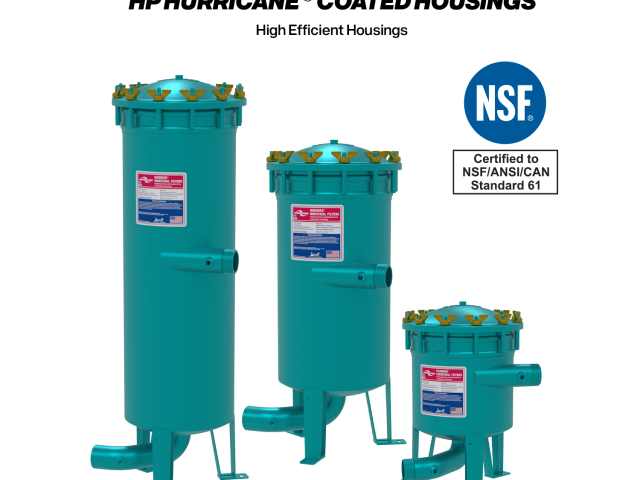
Dense particles — sand, scale, metal fines — are removed most economically by force, not media. The patented up-flow design in Harmsco Hurricane® housings spins them out into a purgeable base chamber, cutting the load that reaches the cartridge by a wide margin in high-solids water.
Stage 2: Cartridge Filtration for the Fines
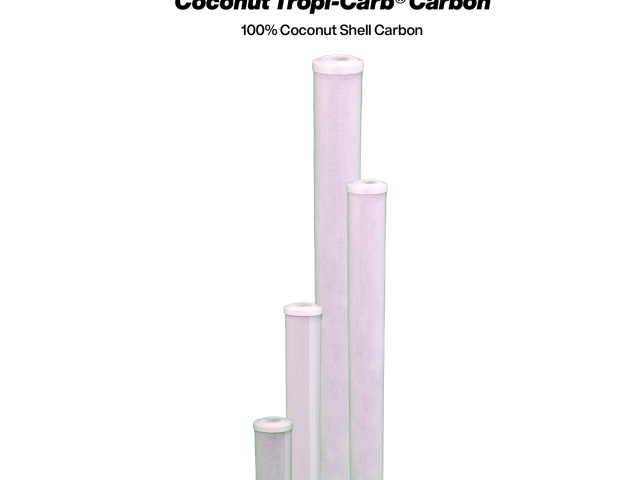
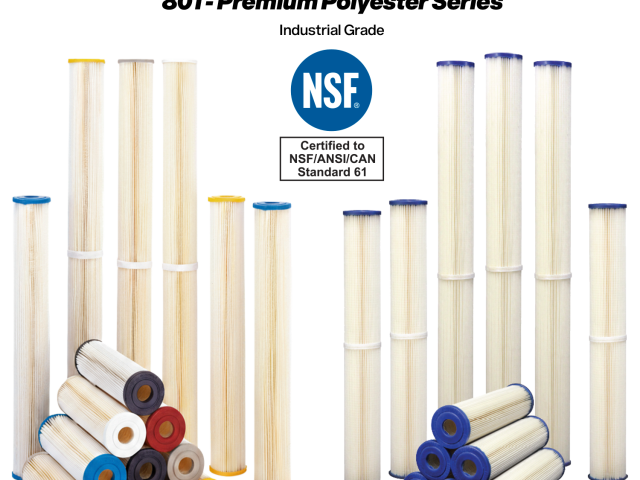
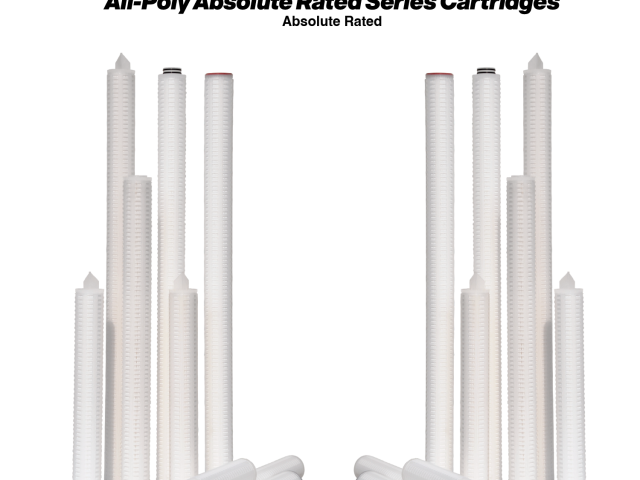
What the cyclone can’t drop, media catches. Harmsco pleated cartridges run from 150 micron down to 1 micron absolute, with chemical-resistant and high-temperature options for demanding process streams — all NSF certified.
Where This Pays Off
- Cooling loops — keep exchanger approach temperatures at design
- Wastewater polish — hold TSS under permit limits before discharge
- Product water — protect spray nozzles, membranes and instrumentation
- Reuse loops — make reclaimed water usable instead of a liability
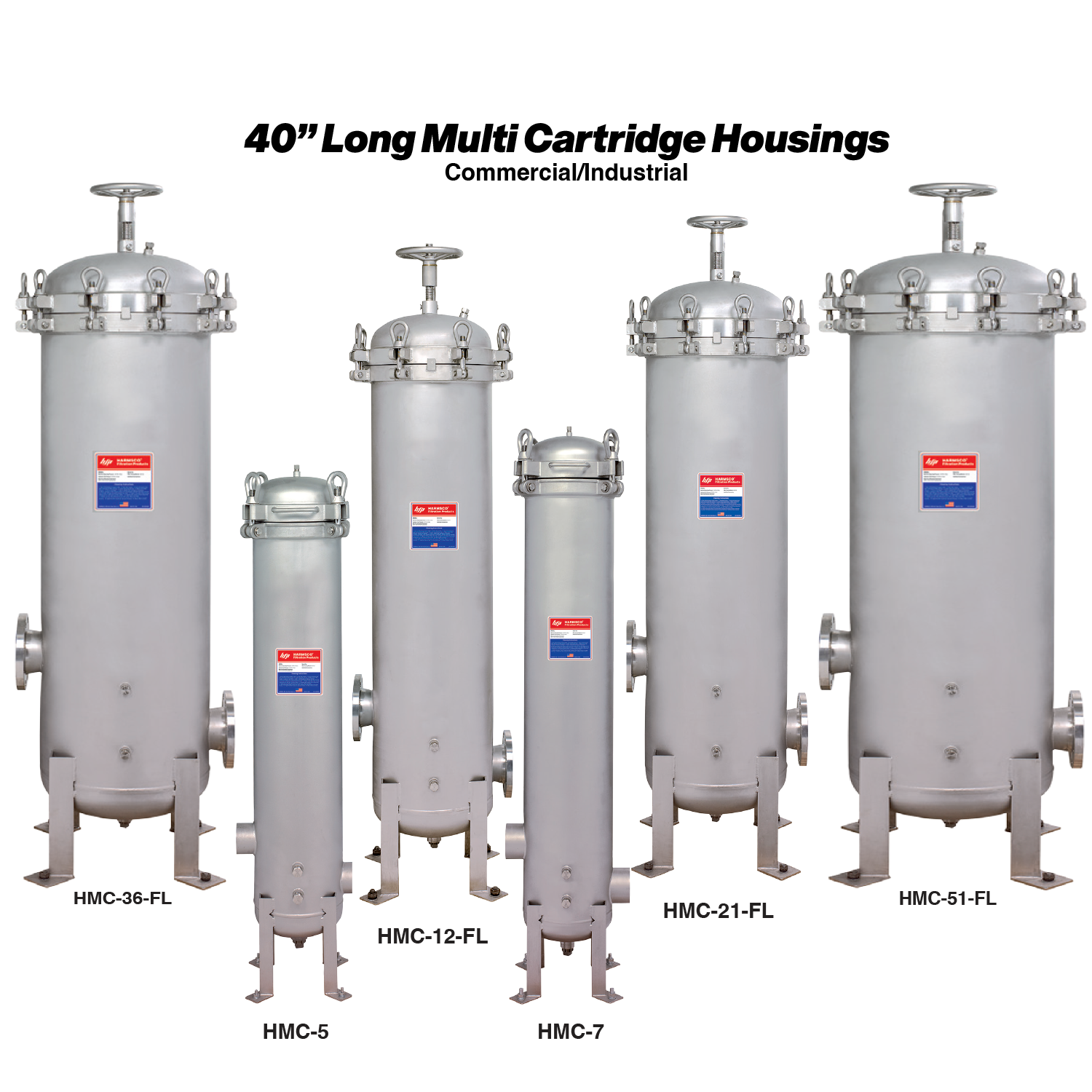
Send Harmsco your water analysis and flow rate — our engineers will stage the removal and size the housings, as we’ve done for American industry since 1958.